


Update: It’s a done deal. The board voted unanimously Monday evening, with Commissioner Aaron Newman absent, to acquire the former pulp mill. Next comes lining up some tenants and figuring out what to do with all those nasty pulping liquors.
Original post:
Negotiations have been going on for months now, but it looks like the time has finally arrived: At a special meeting Monday at 4 p.m., the Humboldt Bay Harbor, Recreation and Conservation District’s board will consider purchasing the defunct pulp mill on the Samoa Peninsula. Well, “purchasing” is probably the wrong word. Board President Mike Wilson says the asking price is zero dollars. “It might be a dollar,” he conceded.
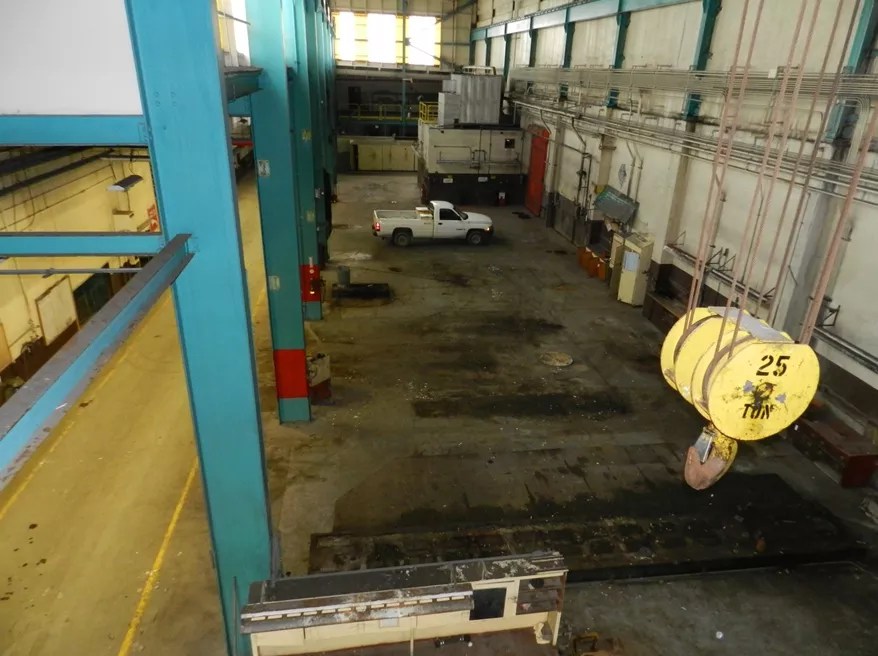
Why would a 156-acre industrial site be free? Current owner Bob Simpson, president of Freshwater Tissue Co., couldn’t be reached immediately for comment. But the property does have some major documented liabilities. For example, the Harbor District would have to figure out what to do with more than four million gallons of toxic “pulping liquors” stored onsite.
It’s also in need of major rehabilitation and modification before it can be put to use. The facility would be transferred “as is,” and the Harbor District is not exactly flush with cash to make improvements. In fact, the agency has been losing more than $275,000 per year, on average, since fiscal year 2000-2001, and it’s projected to lose another $400,000 this year. Cash reserves have dwindled to about $1.5 million, down from more than $6 million in 2006.
But in a June interview Harbor District CEO Jack Crider said this purchase represents the best opportunity to solve a variety of challenges on the peninsula while providing the region with a much-needed public dock — and giving the Harbor District some new opportunities to generate income. The agency has big ideas for the property, including an aquaculture business park, renewable energy facilities and marine research labs, among many others. With a large water-treatment facility and an outfall line that extends a mile and a half into the ocean, potential uses include a bottled water plant, drywall manufacturing, a brewery and a wave energy conduit line.
The purchase agreement is posted on the District’s website [here]. Below we’ve posted some slides from a PowerPoint presentation Crider gave in June to the Humboldt Bay Harbor Working Group. The slides list a variety of other possibilities for the facility. Monday’s meeting will be held at the Woodley Island Marina meeting room.



This article appears in Flash Fiction 2013.

Wow. This sounds like the biggest non-pot story w/r/t Humboldt’s economy in years. They vote on Monday?!
Has anyone done the necessary analysis to determine what the cost of handling “all above-ground hazardous waste” will be? Will this be transferring millions of dollars of mandatory costs onto the Harbor District? I’d love to see the facility put to good use, but “free” rarely means free, at least in the world of business to government transactions.
Simpson is giving away industrial property on Humboldt Bay! Nobody is interested! If this doesn’t clue you in that the east/west rail and shipping port is not on the radar then there is no hope for this area.
If the $300k is wasted on the east/west rail study for the repeated $1.5 billion cost estimate, then can we abandon the heavy industrial empire dream? Look at other areas that have jumped on recreation and tourism through mountain biking, biking and hiking. It leads to small business and light manufacturing growth along with increased property values. This area will continue to stay retarded with” the heavy industrial empire or nothing” mentality.
Might it be possible to use fungi to bio/myco remediate this toxic waste ala paul stamets, mycelium running, etc?
Just how does biking and hiking replace living wage jobs?
Sounds to me like the Harbor district just tied a cement block around its neck. And jumped in the bay. The liabilities are going to be huge. Simpson is no dummy. Oh yeah get the government to pay for it. Its FREE!
I do like the bottled water idea but it is just a drop of water in the ocean when it comes to regaining the economy associated with the pulp mill. Loved it or hated it.
Uri, have you heard of Fox Racing Shox for mountain bikes in Watsonville, CA? Giro Helmets in Santa Cruz, CA? “Santa Cruz” bikes? What about the Sea Otter Classic in Monterey, CA? 50,000 spectators show up. There are all kinds of accessories, apparel, energy drinks. It’s BIG business.
My job sees an increase from tourists every season.
Mutt
What is your job?
Do you think the components for the helmets, bike parts etc…come out of thin air?
Everything we consume and build comes from industry. Industry extracts resources here or in some foreign country. I love mom and pop shops and use them every chance I get but please don’t try to pretend the materials/food/fuel we use are not extracted and turned into something useful mostly by large industry.
The 50,000 folks all got to the big energy drink consuming event on rubber wheels powered by something. Most likely gasoline.
Just sayin’
That’s not my point, Uri. You’re dodging the question of the best path of economic development for this area.
Any update?
Ah, I see the TS reports it has done the acquisition. I guess we’ll eventually find out whether this was a good idea or not.
“Just how does biking and hiking replace living wage jobs?”
Improving the quality of life in a city attracts capital investment.
Eureka offers a chronic example of the opposite, where “free-market” ideology trumps quality of life issues for residents and tourists.
What a beautiful thing! I would like to know more!
NICE 🙂 Let’s make it a nice botanical garden and greenhouse like at HSU. Or maybe a peace garden, nuclear free, gmo free!