|
 
COVER
STORY | PUBLISHER | CALENDAR
Jan. 16, 2003
N E W S A N A L Y S I S
![Targeting Target [photo of old Montgomery Wards building and parking lot]](news0116-target.jpg) by
GEOFF S. FEIN by
GEOFF S. FEIN
The well-publicized dispute
between the Environmental Protection Information Center and the
city of Eureka over a proposed Target store at the north end
of town boils down to differing interpretations of the city's
General Plan.
EPIC says the city is allowing
Target to build closer to the Eureka Slough than is allowed by
its own guidelines. The city says those same guidelines allow
for greater flexibility than EPIC is claiming.
EPIC is hoping the California
Coastal Commission will consider its challenge to the city's
decision. City officials say additional hearings could delay
the project for weeks or months.
Target is planning to build
a 138,700-square-foot store and garden center with 452 parking
spaces at 2525 4th Street. Target will demolish the existing
86,253-square-foot Montgomery Wards store.
The retailer is hoping to open
the store in 2004. It has yet to obtain demolition or building
permits.
The distance between the bay
and the Target property will range from 40 feet to 250 feet with
an average of 100 feet.
Christine Ambrose, "coastal
advocate" for EPIC and author of the appeal, said small
business owners in Eureka encouraged her to file the appeal.
Some of those owners have expressed anxiety that Target could
hurt their businesses.
"We are not opposed to
Target, but we have enough businesses like Target," Ambrose
said.
Ambrose said the city was not
doing enough to protect the fragile wetlands environment near
the property. "Why are [city officials] insisting on building
100 feet from the bay? I haven't heard a good reason why it has
to be 100 feet. This is Humboldt Bay. [We] want to make sure
it's protected."
In her appeal, Ambrose said
that "new construction should require improving existing
onsite conditions. The Target store is not dependent on coastal
resources. The Target store is poorly situated on Humboldt Bay,
and should be re-oriented."
In addition, Ambrose claimed
the city has inadequately addressed storm water runoff.
Ambrose cited a section of the
city's General Plan as grounds for the appeal to the coastal
commission.
That section states, "The
city shall require establishment of a buffer for permitted development
adjacent to all environmentally sensitive areas. The minimum
width of the buffer shall be 100 feet..."
But a closer read of that section
appears to favor the city's position: "...unless the applicant
for the development demonstrates on the basis of site specific
information, the type and size of the proposed development, and/or
proposed mitigation (such as planting of vegetation) that will
achieve the purpose(s) of the buffer, that a smaller buffer will
protect the resources of the habitat area."
The city could also require
a buffer of greater than 100-feet, the section adds.
City officials said flatly that
the appeal has no merit. Environmental planner Lisa Shikany insisted
that the City Council unanimously approved the project in accordance
with Eureka's coastal permitting process.
"The city determined that
the project is in compliance with the General Plan," Shikany
said. "We disagree that a 100-foot buffer is required on
every project."
Shikany cited several projects
that have less than a 100-foot buffer, including several along
Broadway.
City Councilman Jeff Leonard
met with Ambrose back on Dec. 16, the day before the council
approved Target's plan and prior the the filing of the appeal.
Leonard felt Ambrose was satisfied
with the results of the environmental impact report. He said
he was surprised when he learned that EPIC had turned to the
coastal commission.
Leonard said that as far as
he is concerned, the project meets the city's requirements.
"It is going to be a step
forward in terms of environmental quality for that site,"
he said. "Currently there are no setbacks. The project will
improve that site." (A setback is the distance between the
bay and Target's property).
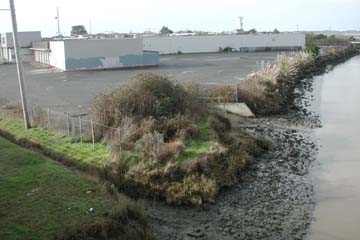 When
Montgomery Wards built its store in the 1960s, the company paved
the area for its parking lot almost up to the shore of the Eureka
Slough. The store was built before the California Environmental
Quality Act went into effect in 1970, so no environmental impact
reports were ever done on the site. When
Montgomery Wards built its store in the 1960s, the company paved
the area for its parking lot almost up to the shore of the Eureka
Slough. The store was built before the California Environmental
Quality Act went into effect in 1970, so no environmental impact
reports were ever done on the site.
Today, a chain-link fence separates
the deteriorating property from the slough. Residents and city
officials who favor a new store say the derelict Montgomery Wards
store is an eyesore. Graffiti decorates the boarded-up building.
The site is more appropriate for a run-down industrial area than
for the northern gateway to Eureka. Weeds are sprouting up through
the asphalt paving. There is nothing to prevent waste and garbage
from running off the property and into the slough, and there
are no buffers in place.
Setbacks are important for wildlife
and for keeping garbage out of the bay, Ambrose said. "The
city doesn't get it."
But the buffers will be strictly
for aesthetic purposes, Shikany said.
"The buffer is not designed
to mitigate water quality," she said. "[Target is]
not planning to send anything through the buffer."
Target plans to put in a water
treatment system to remove upwards of 81 percent of suspendible
solid wastes (oil, trash and silt), Shikany said.
"We are exceeding what
the coastal commission asks," she said. "It will treat
double the volume as required by the coastal commission."
But in her appeal, Ambrose states
that removal of only 80 percent of water pollutants is insufficient,
and that "additional measures should be required."
Even though EPIC's appeal may
raise some valid issues, it is up to the coastal commission's
staff to recommend whether the board should accept the appeal.
Humboldt County Supervisor John
Woolley is the area's representative to the coastal commission.
There are 12 voting members from across the state.
"Staff has [the appeal].
They will put together an analysis and then we judge it by the
virtue of the report," Woolley said.
The coastal commission probably
won't decide whether to review the project until February or
maybe March, if at all, Woolley added.
If the commission opts to review
the project, hearings would be held in San Diego.
Report:
PL logging worsens flooding
by
SETH ZUCKERMAN
A new scientific report last
week linked Pacific Lumber's logging to increased silt and flooding
in North Coast streams, and sparked renewed calls to restrain
the company's rate of cutting.
The study, commissioned by the
North Coast Regional Water Quality Control Board, concluded that
current forestry rules will probably not bring streams back to
health. The seven authors -- five academics and two private consultants
-- were selected from a list approved by Pacific Lumber and its
long-time critic, the Humboldt Watershed Council. The panel's
unanimous verdict adds weight to its conclusions.
"The report confirms that
if you have an excessive rate of harvest, it leads to cumulative
watershed effects," said Nathan Quarles, acting head of
the water board's timber division.
The $85,000 report is the latest
-- and perhaps most definitive -- salvo in a six-year battle
over Pacific Lumber's rate of logging. Since 1997, high water
has repeatedly ravaged homes and farms along Freshwater Creek
and Elk River.
Residents lined up expert testimony
to tie the company's logging to these floods. The company denied
any blame and insisted that its cutting would improve the situation
by funding restoration work to reduce the danger of erosion from
old logging roads.
The new report derides Pacific
Lumber's approach, referring to the "untested promise"
of the firm's restoration efforts, and faulting PL for exaggerating
the benefits of those projects.
Pacific Lumber did not return
repeated calls from the Journal by press time, but spokesman
Jim Branham told the Los Angeles Times that the report
erred in confusing past logging practices with current methods.
"The way we harvest trees today is very different than in
decades past," he told the Times.
The California Department of
Forestry -- which has approved PL's accelerated cutting -- also
took exception to the report's findings. "We keep being
presented with models that tell us the sky is falling,"
said John Munn, a soil and water scientist for CDF. "We
just don't see it."
Freshwater Creek resident Alan
Cook was incredulous. "Homes that have stood in the floodplain
for decades are now getting water inside the house for the first
time," he said. "The creek becomes muddy and remains
muddy well beyond what anyone recalls."
Local activists hailed the report
as a vindication of the charges they've leveled against PL's
brand of rapid timber harvest. "Pacific Lumber is saying
that falling trees doesn't discharge waste into creeks -- and
this report says exactly the opposite," said Ken Miller,
a board member of the Humboldt Watershed Council. "If the
recommendations in this report are followed, we would see a dramatic
reduction in logging" in Elk River and Freshwater, Jordan,
Bear, and Stitz creeks, he added.
Quarles and his colleagues will
ask the water board to act on the report at its meeting in Santa
Rosa January 23. The board could put new rules in place limiting
PL's rate of harvest within one to two months if it chooses to
do so, he said.
Prompt action, in fact, is one
of the report's recommendations. "It is essential that corrective
actions be started soon and not postponed awaiting research and
monitoring that would take place over a period of years,"
the authors said. Upcoming meetings of the water board will tell
whether the science in the report can stand up to the political
storm that is sure to follow.
Freelance writer Seth Zuckerman
used to live in Petrolia. He is now a resident of the Puget Sound
area.
Deadly
virus cancels bird show
by
GEOFF S. FEIN
Next month's Redwood Acres Fair
Show, the largest poultry exhibition in Humboldt County, has
been cancelled due to the outbreak in Southern California of
Newcastle virus, a fatal disease that has led to the quarantine
and destruction of millions of chickens in six California counties.
The disease is 100 percent fatal
to birds, but does not pose a threat to people. It usually hits
commercial chicken and turkey farms the hardest, but this time
state agricultural officials are finding more backyard fowl infected
with the illness. That could spell trouble for poultry farmers
and 4-H projects on the North Coast, where backyard operations
predominate.
"There is always a concern
over a statewide issue like that," said John Falkenstrom,
Humboldt County agriculture commissioner.
The Redwood Acres event would
have showcased 1,400 birds brought in by about 100 exhibitors.
The annual show typically raises $2,000.
If the disease is not eradicated,
this year's poultry exhibit at the Humboldt County Fair in Ferndale
-- held in late summer -- could be cancelled as well. "I
have a feeling we will have to cancel it," said Harry Majors,
president of the Humboldt Poultry Fanciers Association.
"We hoped [the disease]
would have ended by Jan. 1, but [it] is getting bigger than [state
officials] had thought."
The state has also put restrictions
on the shipment of birds into and out of Humboldt County, he
said.
Just how many birds in Humboldt
County could be affected by the disease is unknown.
"There are so many backyard
people raising chickens [in Humboldt County]," Majors said.
"I don't know how many poultry people there are."
Ducks, geese, doves, pigeons,
grouse, swans, pheasants, quail, emus and ostriches are also
susceptible to the virus, he said.
This isn't the first time the
Redwood Acres event has been cancelled by Newcastle. Poultry
farmer Agnes Wilson, 56, recalled that the 1972 exhibit was cancelled
because of a Newcastle outbreak in Southern California.
Wilson has been raising poultry
for show since she was a child. She has seen chickens
die from Newcastle.
"It's serious. I don't
want it to happen here," she said.
Wilson, a "Grand Master"
(there have been less than 200 so designated since the 1800s),
raises Rhode Island Reds in Blue Lake.
She and her daughter have exhibited
chickens up and down California. At times, Wilson has had more
than 300 chickens, but this year her flock is down to about 75.
Birds are often sold for as much as $75 apiece.
"[Newcastle virus] can
hit people hard who have been raising birds all their lives,"
Wilson said.
Wilson knows a breeder in Southern
California who had to kill all of his fowl because of the outbreak.
"I feel sorry for [him],"
Wilson said.
The virus could also have an
impact on the price of eggs and other food items as more and
more chickens are destroyed, Wilson added.
Humboldt County poultry farmers
haven't reported any instances of the disease yet. That's because
the disease typically requires a warm climate in order to spread.
According to the U.S. Department
of Agriculture, the disease can "survive for weeks in a
warm and humid environment on birds' feathers, manure and other
materials."
Nonetheless, Falkenstrom said
Humboldt County takes any report of dead chickens seriously.
Symptoms of the disease include
sneezing, coughing, nasal discharge, diarrhea, listlessness and
sudden death.
The disease is spread primarily
through direct contact between healthy birds and the bodily discharges
of infected birds.
Poultry can die without any
sign of having the disease. But once the disease is found, all
of the birds in a commercial or backyard farm must be destroyed
and all equipment and material must be thoughly disinfected.
"You have to depopulate
[the farm], disinfect the area and bring in new healthy birds,
and then see if they are disease-free for 30 days," Falkenstrom
said. "It's a hellacious, labor-intensive quarantine."
State officials are also concerned
that soil could be contaminated with Newcastle virus for up to
a year, Majors said.
Newcastle disease has been traced
back to fighting birds brought in from Mexico, Majors added.
Amazon parrots smuggled into
the United States from Latin America also pose a significant
risk of transmitting the virus.
There have been no reported
cases of the disease north of Santa Barbara County. Information
on the deadly disease has been sent out to pet stores and the
state's regional veterinarian has been sent down to Southern
California to help in the eradication efforts, Falkenstrom said.
The California Department of
Food and Agriculture had already suspended all poultry exhibits
in Southern California and all bird owners are being asked to
stop the movement and sales of backyard birds.
Los Angeles, San Bernardino,
San Diego, Riverside, Ventura and Santa Barbara Counties have
all been quarantined by the state. Last month Gov. Gray Davis
declared a state of emergency in Southern California in order
to control the outbreak of the disease.
The last known outbreak of Newcastle
occurred in 1971. Almost 12 million birds in Southern California
had to be destroyed. It cost taxpayers $56 million to eradicate
the disease.
 Palmquist killed in
hit-and-run Palmquist killed in
hit-and-run
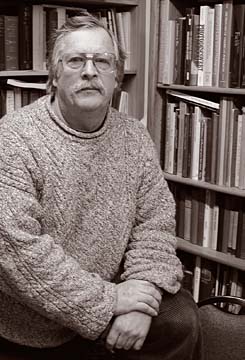
Historian, and photo archivist
Peter Palmquist, 66, died Monday morning in a Bay Area hospital
from injuries received Saturday in a hit-and-run accident in
Emeryville, just east of San Francisco.
According to investigating officer
Jason Bosseti of the Emeryville Police, Palmquist was crossing
the street while walking his dog, Max, Saturday evening when
he was struck by an unidentified driver. Witnesses on the scene
said the vehicle may have been a Ford Taurus or a Mercury Sable,
either silver or light blue in color.
Born in Oakland and raised in
Ferndale, Palmquist was a world renowned authority on 19th-century
photography and a collector of photographs and photo memorabilia.
He served in the U.S. Army as
a photographer and was the official photographer for Humboldt
State University for 23 years. On the side he amassed an amazing
archive, around a quarter million images by photographers of
the Western United States, including 85,000 images by Humboldt
County photographers.
The vast majority of that collection
was purchased by the Beinecke Rare Book and Manuscript Library
at Yale University in Connecticut to become part of its Western
Americana collection. (See Journal cover story,
"A photographer's obsession," Jan. 24, 2002.)
Palmquist also compiled extensive
notes on the images and was preeminent as a biographer of 19th-century
photographers. He published more than 60 books on the subject
ranging from his first, Fine California Views: The
Photographs of A.W. Ericson, a profile of the Arcata photographer,
to his masterwork, Pioneer Photographers of the Far West:
A Biographical Dictionary, 1840-1865, the first volume in
a colossal biographical dictionary compiled with assistance from
Thomas Kailbourn.
More recently Palmquist shifted
his focus to the Women in Photography International Archive.
He and his partner, Pam Mendelsohn, commuted between Palmquist's
home in Arcata and her place in Emeryville while working on what
he described as an effort "to identify, collect, preserve,
and disseminate information about women photographers."
-- reported by Bob Doran
HSU
prepares for cuts
Further hikes in student fees
are a likelihood as Humboldt State University prepares for the
impact of state budget cuts.
Gov. Gray Davis is proposing
to cut the budget for the entire California State University
system by $326 million, roughly equivalent to three times HSU's
annual budget.
The budget shortfall, also a
major problem last year, has already led to $69 million in cuts
and a 10 percent student fee increase.
Davis' new budget authorizes
the Trustees of the CSU system to increase student fees by another
25 percent, a move they are likely to take.
"Unless something changes
that will have an impact on them, I don't think [the trustees]
are going to be very reluctant to increase fees," said John
Travis, HSU's representative to the California Faculty Association.
The CFA is concerned that the
budget cuts will lead to teacher layoffs, increased class sizes,
and over-burdened schools as the children of the Baby Boomers
graduate from high school.
"To say we're worried is
putting it mildly," said Liz Taiz CFA's vice president,
speaking from her home campus at CSU Los Angeles.
She said they had to avoid the
mistakes made in the last round of budget cuts, in the early
'90s, which led to layoffs, program cuts, and a 50 percent increase
in student fees. She added that the student fee increases may
restrict access to higher education. She said that the last fee
hike led to more than 20,000 students dropping out because they
couldn't afford it.
"We've belt tightened before,"
she said. "But I'm always afraid that the belt is going
to slip up around our neck."
Fortuna
man arrested
Since December 2001, David Kenneth
Huffman, 29, has allegedly been posing as a 14-year-old boy dying
from brain cancer. He used the ruse to develop online relationships
with teenage girls from as far away as Massachusetts to get them
to send him nude photos of themselves.
On Monday, Fortuna police, along
with agents from the FBI, the U.S. Marshall's Office and the
Northern California Computer Crimes Task Force, arrested Huffman
at his Campton Heights Drive home. Huffman was arrested for violating
federal law involving the possession, receipt and attempted production
of child pornography.
Huffman is suspected of adopting
an alternative identity to lure girls as young as 13 to send
him nude photos of themselves so that he could see a naked girl
before he dies. Police said Huffman transferred the images as
well as hundreds of images of child pornography from the Internet
onto compact disks, according to police.
The investigation began last
summer when a detective with the West Virginia Sheriff's office
notified Fortuna Police that a 17-year-old Fortuna teen, going
by the name of Jeff Singleton, had asked a teenage girl to send
him nude photos.
The girl took the photos of
herself and e-mailed them to Singleton, who according to police
was actually Huffman. It was later discovered that Huffman was
posing as several people on the Internet.
Huffman and the girl had also
sent each other items through the mail. Huffman's was found because
his return address was on an envelope.
If convicted of the charges,
Huffman could spend up to 20 years in prison.
Smallpox
vaccinations begin
Beginning next month, as many
as 200 Humboldt health care professionals will be inoculated
against smallpox so that they will not be incapacitated in the
event of an outbreak.
Dr. Ann Lindsay, a Humboldt
County public health official, announced the formation of the
"smallpox response teams" at a Tuesday press conference.
It was dubbed as phase one of
the federally mandated small-pox program. The effort is being
undertaken to increase preparedness in the event of a "bio-terror"
attack using the deadly virus.
Phase two will involve the inoculation
of a wider range of health care and emergency professionals,
possibly followed by phase three, vaccination of the general
public to come no earlier than 2004.
"We're just being careful,"
Dr. Lindsay said. "This is a very preliminary preventive
measure."
Presently there are only two
places in the world where small pox is known to be present, Atlanta,
at the headquarters of the Center for Disease Control and at
its equivalent in Russia.
Storm costs
mount
For the second week in a row
the Humboldt County Board of Supervisors declared a local emergency
due to millions of dollars in storm damage to roads and bridges
throughout the county.
Early estimates show the county
could be facing a $5 million price tag to repair damage from
the December storms.
Humboldt County public works
officials estimate it will cost at least $1.57 million for road
repairs alone. That's less than the $2.1 million Eureka is expecting
to pay to repair streets. Ferndale may have to dish out $120,000
and Rio Dell is anticipating $63,000 in road repairs.
The Howe Creek Bridge, west
of Rio Dell, is expected to cost $250,000 to repair.
"It will be a costly project,"
said Allen Campbell, director of public works.
Making matters worse, the county's
road maintenance fund will most likely be depleted by the costs
of all the repair work. That is because the state is cutting
the amount of money it gives to Humboldt County by $1.2 million.
With only $600,000 in reserves,
Campbell said it is likely the fund is going to be running in
the red.
Reported damage to homes in
Humboldt County has surpassed $430,000, while in Eureka the cost
is expected to exceed $100,000, according to Loretta Nickolaus,
county administrative officer.
The Humboldt Bay Harbor District
has also reported $1.5 million in damage from silt runoff.
Officials from the state Office
of Emergency Services will begin inspecting Humboldt County later
this week. Their findings could help Humboldt County receive
state and possibly federal assistance to offset some of the repair
costs.
A tug goes
down
The Primo Brusco, a 99-foot
tug boat pulling a 260-foot barge loaded with one million board
feet of logs from Aberdeen, Wash., to Eureka, sank off the Oregon
coast late last month leaving one crewman dead.
The tug was on one of its three
monthly trips to Eureka when it sank in 30-foot seas in the early
morning of Dec. 30. Monty Nelson, 47, of Washington State, one
of five crewmen aboard the tug, died. The remaining survivors
were rescued by the U.S. Coast Guard.
According to a company report,
an alarm on the Primo Brusco began ringing at 10:30 p.m. indicating
that there was flooding in the rear compartment of the tug. The
tug's engineer began pumping the water out and the crew believed
the problem had been taken care of. About four hours later the
crew awoke to find the ship listing heavily with the stern section
under water.
Attempts were made to release
the barge from the tug but those proved unsuccessful. Within
five minutes the crew were then given orders to abandon ship.
Three crewmen got into the tug's life raft. The two remaining
crewmen donned immersion suits and jumped into the water.
Two Coast Guard rescue helicopters
arrived, picking up the three men in the life raft and one crewman
in the water.
Nelson's body was recovered
on Dec. 31.
The barge loaded with lumber
was taken by another tug boat to Coos Bay, Ore.
According to a company press
release this was the first incident like this in the company's
19 year history.
Brusco Tug & Barge, headquartered
in Longview, Wash., operates 50 tugs and barges from Alaska to
the Gulf of Mexico. The company employs 175 workers and has facilities
in Sacramento, Stockton, Port Hueneme and Eureka.
Fallen Giant
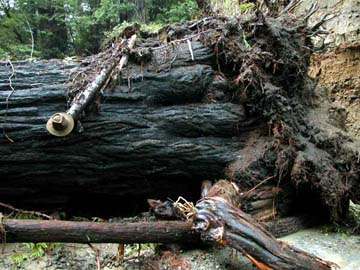
For maybe a thousand years,
this eight-to-ten-foot diameter redwood tree -- located inside
Humboldt Redwoods State Park -- stood alongside Bear Creek. But
after last month's torrential rains, it came down. According
to Jesse Noell of Salmon Forever, a group that monitors the environmental
impact of logging, about half-a-dozen big trees came down in
the vicinity of this one -- all located within the Quigley Grove
on the Avenue of the Giants. Noell said the trees were undercut
by floodwaters coming off overlogged land belonging to the Pacific
Lumber Co. Spokeswoman Mary Bullwinkel said she was unaware of
the downed trees and could not comment. Park Supervisor Steve
Horvitz said he'd heard a report that as many as a dozen trees
had come down in that general area -- near where Bear Creek feeds
into the Eel River -- but that he has yet to confirm it. "We
haven't been to the river's edge since the storm. We've mainly
been concentrating on keeping the roads clear."
[photo courtesy of Salmon
Forever]
Anti-war
protest
Humboldt County activists are
heading to San Francisco to join a worldwide demonstration against
the looming war with Iraq.
Other anti-war demonstrations
on the same day -- Jan. 18 -- will take place in Washington,
D.C. as well as 25 other countries around the world including,
England, Japan, Canada, Italy, France, South Korea, Egypt and
Russia.
About 70 people from Humboldt
County are taking charter buses from Arcata to San Francisco.
The buses will leave from the Arcata Co-op at 3 p.m. on the day
before the event.
Other demonstrators plan to
carpool or take Greyhound buses to San Francisco. A third charter
bus will leave from Southern Humboldt County.
The protest will begin Saturday,
Jan. 18 at 11 a.m. at Market Street and Embarcadero. Demonstrators
will march to the San Francisco Civic Center on Market Street
(adjacent to City Hall), where a rally will take place at 1 p.m.
The buses will return to Humboldt County that evening.
This will be the second anti-war
rally in San Francisco in four months. In October approximately
80,000 people turned out for an anti-war demonstration, said
Mary Ann Lyons of Arcata.
Lyons is helping to spread the
word about this month's demonstration.
"I'm excited to be doing
what I can," she said.
Lyons attended the October rally.
She said she became involved because "what is happening
isn't right."
The event is being organized
by A.N.S.W.E.R. - Act Now to Stop War and End Racism - an international
peace organization headquartered in New York.
Among the speakers expected
at the rally are former U.S. Attorney General Ramsay Clark.
For more information contact
Lyons at 826-1506.
Stores to
remain open?
Kmart Corp. will close at least
300 stores nationwide by the end of the January. Whether the
Eureka and McKinleyville stores will close is an open question.
Shelley Clark, manager of the
McKinleyville store, said she has not received any notification
that her store or the Eureka store will be closed.
But the final list of stores
closings won't be made available until Jan. 17. That list will
be filed with the bankruptcy court on Jan. 28. The court has
to approve any store closings.
Kmart officials announced the
closings on Jan. 10 as part of its bankruptcy reorganization
plans. The retailer filed for bankruptcy a year ago.
Worthington
will close
It's official. Worthington School
will cease to exist come the end of the school year in June.
Last week, the Eureka City Schools'
Board of Education followed Superintendent Jim Scott's recommendation
to close the school, making it official in their newly approved
facilities plan.
School closure was deemed necessary
due to a 900-student drop in enrollment in the district over
the last seven years, which translates into $4.5 million less
in funding from the state.
Scott had suggested closing
another school as well, but the board decided against it.
Making it
easier
To help first-time home buyers
in Eureka overcome the increasing cost, and lack of housing the
City Council, Tuesday, approved a plan to increase the maximum
purchase price to $150,000 and increase the city's down payment
to $50,000.
The aim is to jump-start the
program after five months of inactivity. For fiscal year 2003-2003,
the city's first-time home buyers program has lent only $30,000
out of $300,000 set aside for the program.
The problem: the program was
limited to homes that cost $110,000 or less and there were no
such homes.
City Manager David Tyson will
be responsible for approving loans.
Since the program's adoption
in 1991, the city has issued 108 loans totaling about $1.380
million.
Memorial
fund
The Henderson Center branch
of Humboldt Bank has set up a memorial account for the Medina
family, whose three sons -- Rico, Hoyce and Faustino -- died
in a Christmas Eve fire at their Blue Lake home.
The boys ranged in age from
five to eight. The boys' mother, Jennifer, 28, and another woman
escaped the blaze.
The family is in need of women's
and toddler's clothing as well as blankets and groceries.
For more information contact
Yvonne Baird, 442-8354.
Jack Watch
The Jacks preserved their perfect
season with two more home wins last week, bringing their record
this season to 12-0 and their home-game winning streak to 25
in a row, the second longest in NCAA Division II history.
The weekend double header started
off with a bang Thursday night as the Jacks came out fast against
Northwest Nazarene's Crusaders, maintaining a commanding lead
throughout and winning 94-70.
On Saturday, facing the Redhawks
of Seattle University, the Jacks started out slowly, leaving
the score disturbingly close at half time. But they pumped up
their defense in the second half and cruised to a 70-56 victory.
This week the Jacks are on the
road, facing Saint Martin's College in Lacey, Wash., on Thursday,
followed by Central Washington in Ellensburg Saturday night.
COVER
STORY | PUBLISHER | CALENDAR
Comments? E-mail the Journal: ncjour@northcoast.com
© Copyright 2003, North Coast Journal,
Inc.
|